Product development · Multiplayer 3D · Live · Still growing
Somewhere Together
From a shared experience to the systems that make it work.
Visit Somewhere Together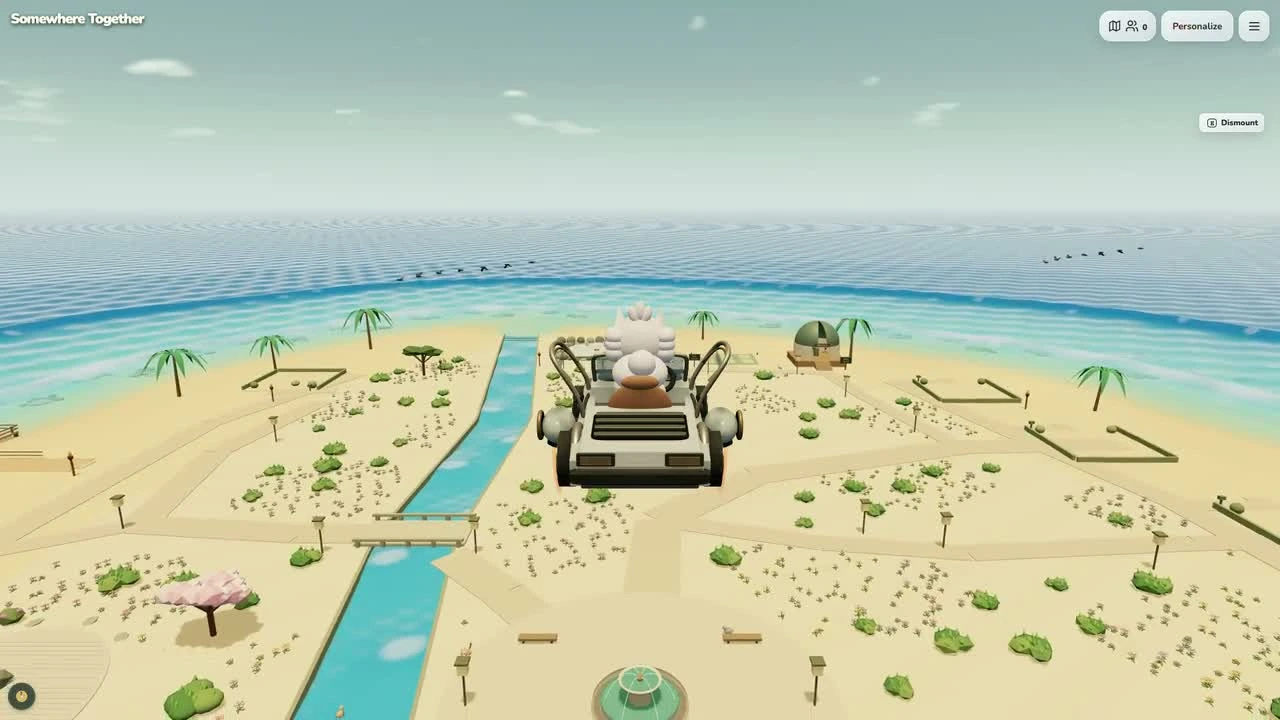
Overview
Somewhere Together is a live browser world and a hands-on product-development case study. I work across the product strategy, interaction design, procedural 3D, multiplayer architecture, and feedback loop, turning a social idea into a working shared experience.
RoleIndependent creator — product strategy, UX, 3D development, multiplayer systems, and iteration with AI
Start with the experience
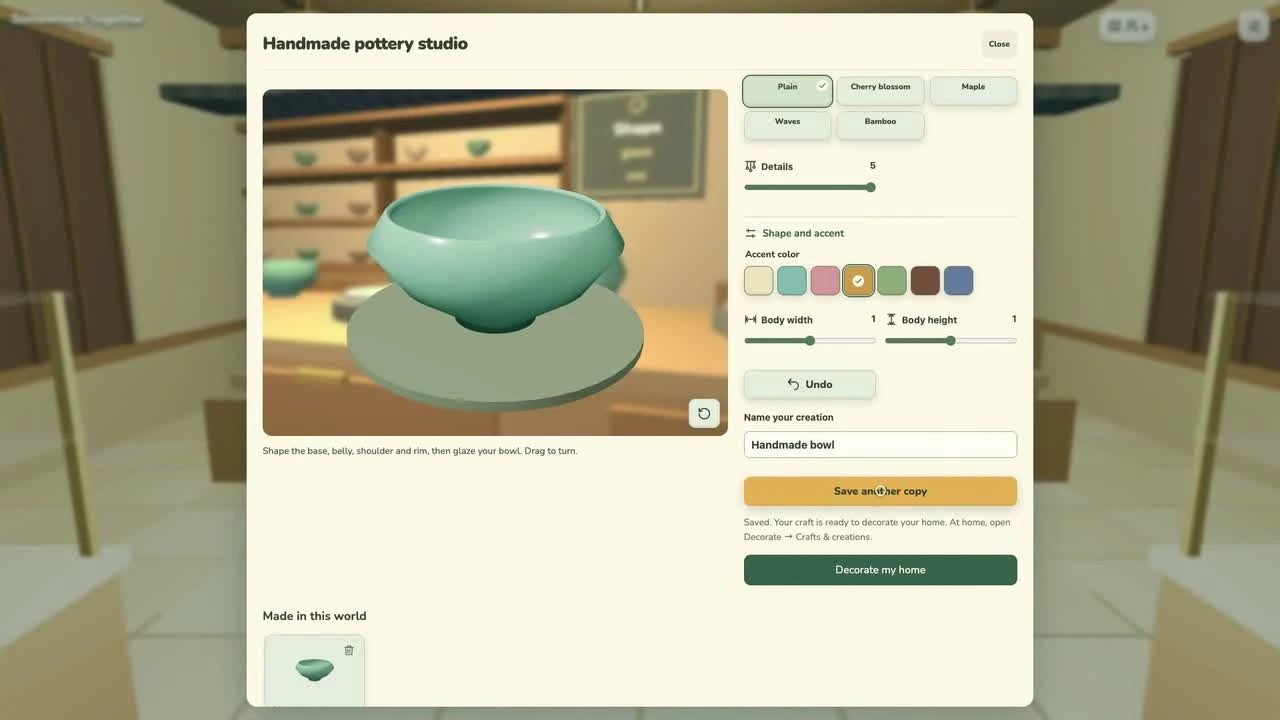
The images are October 19, 2026 staged local gameplay captures of existing mechanics. The product question is how to give friends a place to spend time together without requiring everyone to follow the same objective. That leads to a shared world with room to explore independently, regroup, make things, or join an activity. The same work I bring to B2B products applies here: define the experience people need, then make the system support it.
Design the whole journey
An appealing world is only one part of the experience. Invitations, first entry, returning visits, contextual controls, and recovery all need to make sense. A concrete iteration was restoring a returning player’s acknowledged identity and location instead of putting another title screen in the way. Interface decisions are tested in the working product, across desktop and phone layouts.
Make shared state dependable
Three.js renders the world, with Rapier handling movement and collision. Multiplayer activity state and checkpoints have server-side authority in Cloudflare Durable Objects; real-time connections keep the shared experience coordinated. Scene preparation, reconnect behavior, and persistence are explicit parts of the architecture. These are product concerns: friends should be able to rejoin a shared experience without the interface or network model getting in their way.
Build a native prototype, use and measure it, then decide whether friction remains. Revise and test again when it does; otherwise release and bring new observations into the next prototype.
Research, build, observe, refine
I combine reference research, hands-on playtesting, and tester feedback with implementation checks. Enjoyment of the Tuft Cat character, for example, led to exploring the separate Tuft Timer utility. The game is live and continues to evolve; broader group and device testing is still ahead.
Go deep with current tools
AI-assisted development lets me work across unfamiliar parts of game creation while staying responsible for the product decisions, source, and verification. Procedural geometry makes the world editable as code; short build-and-review loops let me inspect the actual result. That combination of product design and technical depth carries into my work on serious B2B systems, internal tools, and everyday apps.
Media and prototypes
01 items